
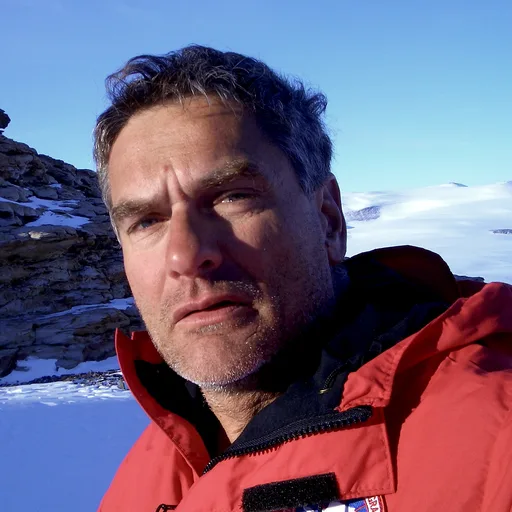
Visit Rakiura

Christopher P. McKay

NASA Ames Research Center

Full coverage. Every paper by this person that we could obtain has been read.

Skills

Supported by one paper

?

Supported by a quote from a single paper with the person in an attributable author position.

Mass spectrometryReviewed

An analytical technique for identification of chemical structures, determination of mixtures, and quantitative elemental analysis, in which ions are separated according to the mass/charge ratio and detected by a suitable detector.

Supported by 1 paper.

Show the supporting quotes
Mass spectrometry and spectroscopy provide key tools for advancing this task and are two techniques that provide useful and highly complementary compositional information independent of a specific biochemical pathway. Here we address some of the utility and limitations of applying these techniques to both orbital and in situ exploration of icy moons of the outer solar system.
Spectroscopic and spectrometric differentiation between abiotic and biogenic material on icy worlds (2010) DOI

SpectroscopyReviewed

The study of spectral lines from different atoms and molecules. Spectroscopy is an important part of studying the physical and chemical properties of astronomical objects.

Supported by 1 paper.

Show the supporting quotes
Mass spectrometry and spectroscopy provide key tools for advancing this task and are two techniques that provide useful and highly complementary compositional information independent of a specific biochemical pathway. Here we address some of the utility and limitations of applying these techniques to both orbital and in situ exploration of icy moons of the outer solar system.
Spectroscopic and spectrometric differentiation between abiotic and biogenic material on icy worlds (2010) DOI

adenosine 5′-triphosphate (ATP)Used

Supported by 1 paper.

Show the supporting quotes
Phyllosilicate and hematite-rich deposits from the Atacama Desert (Chile), Death Valley (CA), and the California Coast, encompassing a broad arid to hyper-arid climate range (annual rainfall <0.2 to ∼700 mm/year), were analyzed for total and viable Gram-negative biomass, i.e. adenosine 5′-triphosphate (ATP) and Limulus amebocyte lysate (LAL) assays.
Biomass and habitability potential of clay minerals- and iron-rich environments: Testing novel analogs for Mars Science Laboratory landing sites candidates (2010) DOI

adenosine triphosphate (ATP)Used

Supported by 1 paper.

Show the supporting quotes
The most effective five-step decontamination combined safer-to-use sterilants (3%_hydrogen-peroxide-activated 5%_sodium-hypochlorite), and in situ real-time verification by adenosine triphosphate (ATP) and Signs of Life Detector (SOLID) Fluorescence Immunoassay characterization of hardware bioburden and airborne contaminants.
In Situ Real-Time Monitoring for Aseptic Drilling: Lessons Learned from the Atacama Rover Astrobiology Drilling Studies Contamination Control Strategy and Implementation and Application to the Icebreaker Mars Life Detection Mission (2023) DOI

Allura RedUsed

Supported by 1 paper.

Show the supporting quotes
Anazodye, Allura Red, is a complex organic that will act as a tracer molecule allowing for quantitative analysis of light absorption through a spectrophotometer.
Bubbles on Enceladus (2016)

amino acid concentrationUsed

Supported by 1 paper.

Show the supporting quotes
The horizontal distribution of phosphatase activity and other parameters in soils from the Atacama Desert showed that phosphatase activity was positively correlated with amino acid concentration and colony-forming units and negatively correlated with precipitation amount.
Biomarkers in the Atacama Desert along the moisture gradient and the depth in the hyperarid zone: Phosphatase activity as trace of microbial activity (2022) DOI

Analyses of the plume of icy materialReviewed

Supported by 1 paper.

Show the supporting quotes
Analyses of the plume of icy material emanating from the south polar terrain of Enceladus by the Cassini spacecraft point to a habitable subsurface ocean.
Enceladus Astrobiology, Habitability, and the Origin of Life (2018) DOI

Analysis of the plumeReviewed

Supported by 1 paper.

Show the supporting quotes
Analysis of the plume by the Cassini mission indicates that the steady plume derives from a subsurface liquid water reservoir that contains organic carbon, biologically available nitrogen, redox energy sources, and inorganic salts.
Follow the Plume: The Habitability of Enceladus (2014) DOI

assayed fluorometrically using 4-methylumbelliferyl phosphate as a substrateUsed

Supported by 1 paper.

Show the supporting quotes
Phosphatases extracted with Tris buffer were assayed fluorometrically using 4-methylumbelliferyl phosphate as a substrate.
Biomarkers in the Atacama Desert along the moisture gradient and the depth in the hyperarid zone: Phosphatase activity as trace of microbial activity (2022) DOI

attenuated total reflection Fourier-transform infrared (ATR-FTIR) spectroscopiesUsed

Supported by 1 paper.

Show the supporting quotes
We further corroborated results from the Biofinder fluorescence imagery through Raman and attenuated total reflection Fourier-transform infrared (ATR-FTIR) spectroscopies, scanning electron microscopy, energy dispersive X-ray spectroscopy (SEM-EDS), and fluorescence lifetime imaging microscopy (FLIM).
Biofinder detects biological remains in Green River fish fossils from Eocene epoch at video speed (2022) DOI

autonomous rover-mounted robotic drill prototypeUsed

Supported by 1 paper.

Show the supporting quotes
In 2019, the Atacama Rover Astrobiology Drilling Studies (ARADS) project field-tested an autonomous rover-mounted robotic drill prototype for a 6-Sol life detection mission to Mars (Icebreaker).
In Situ Real-Time Monitoring for Aseptic Drilling: Lessons Learned from the Atacama Rover Astrobiology Drilling Studies Contamination Control Strategy and Implementation and Application to the Icebreaker Mars Life Detection Mission (2023) DOI

Biofinder fluorescence imageryUsed

Supported by 1 paper.

Show the supporting quotes
Fluorescence images taken by the Biofinder instrument show that all Knightia spp. fish fossils analysed from the Green River formation (Eocene, 56.0-33.9 Mya) still contain considerable amounts of biological residues.
Biofinder detects biological remains in Green River fish fossils from Eocene epoch at video speed (2022) DOI

calculate the increased infrared fractionUsed

Supported by 1 paper.

Show the supporting quotes
If Titan was placed at a distance from a red dwarf star such that it received the same average flux as it receives from the Sun, we calculate the increased infrared fraction, which will warm surface temperatures by an additional ∼10 K.
Titan under a red dwarf star and as a rogue planet: requirements for liquid methane (2011) DOI

calibration derived from B. subtilis sporesUsed

Supported by 1 paper.

Show the supporting quotes
Using the calibration derived from B. subtilis spores, we estimated that microbial content at our primary sampling site was 10(7) bacteria per gram of soil, a level confirmed by phospholipid fatty acid analysis.
In Situ Microbial Detection in Mojave Desert Soil Using Native Fluorescence (2012) DOI

cell production is estimatedUsed

Supported by 1 paper.

Show the supporting quotes
From vent H2 concentrations of 7.8 mM (e.g., Lost City) and assuming complete H2 use and conversion to chemical energy by methanogens, cell production is estimated.
Abiotic and Biotic Formation of Amino Acids in the Enceladus Ocean (2017) DOI

characterization descriptionsUsed

Supported by 1 paper.

Show the supporting quotes
Our preliminary overview trials showed that when in simulated EVAs, 25% stromatolite fossil evidence is missed with more incorrect identifications compared to ground truth surveys but providing quality characterization descriptions becomes less affected by simulated EVA limitations as the science importance of the features increases.
The performance of field scientists undertaking observations of early life fossils while in simulated space suit (2013) DOI

chemical kinetics modelIntroduced

Supported by 1 paper.

Show the supporting quotes
A chemical kinetics model was developed to predict the degree of oxidation and chlorination of organics in the Viking oven.
Reanalysis of the Viking results suggests perchlorate and organics at midlatitudes on Mars (2010) DOI

chromogenic assay-based detection of various hydrolytic catalytic activitiesIntroduced

Supported by 1 paper.

Show the supporting quotes
The instrument uses chromogenic assay-based detection of various hydrolytic catalytic activities, which are matched to corresponding artificial substrates having the same, chromogenic (preferably fluorescent) upon release, group; D- and L-enantiomers of these substrates can be used to also answer the question whether unknown life is chiral.
Organic Catalytic Activity as a Method for Agnostic Life Detection (2023) DOI

colony-forming unitsUsed

Supported by 1 paper.

Show the supporting quotes
The horizontal distribution of phosphatase activity and other parameters in soils from the Atacama Desert showed that phosphatase activity was positively correlated with amino acid concentration and colony-forming units and negatively correlated with precipitation amount.
Biomarkers in the Atacama Desert along the moisture gradient and the depth in the hyperarid zone: Phosphatase activity as trace of microbial activity (2022) DOI

Compact Color BiofinderIntroduced

Supported by 1 paper.

Show the supporting quotes
We have developed a highly sensitive instrument, the "Compact Color Biofinder", which can locate minute amounts of biological material in a large area at video speed from a standoff distance.
Biofinder detects biological remains in Green River fish fossils from Eocene epoch at video speed (2022) DOI

compare this early warm environment to the first Gyr of Earth's historyUsed

Supported by 1 paper.

Show the supporting quotes
In this review we compare this early warm environment to the first Gyr of Earth's history, the time within which we know life originated.
THE POSSIBILITY OF LIFE ON MARS DURING A WATER-RICH PAST (2018) DOI

comparison of the metallicity distribution of extrasolar planet host stars with the metallicity distribution of the outUsed

Supported by 1 paper.

Show the supporting quotes
We compare the metallicity distribution of extrasolar planet host stars with the metallicity distribution of the outer star clusters of M87 and M32.
The galactic habitable zone in elliptical galaxies (2012) DOI

comparison of the metallicity distribution of nearby stars with the metallicity of stars with planetsUsed

Supported by 1 paper.

Show the supporting quotes
We have compared the metallicity distribution of nearby stars with the metallicity of stars with planets to document the correlation between metallicity and planet formation and to provide a comparison to other galaxies.
The galactic habitable zone in elliptical galaxies (2012) DOI

computational fluid dynamicsUsed

Supported by 1 paper.

Show the supporting quotes
To this end, we report on technology advances that focus on understanding contamination transfer from pre-launch processing to end of mission using high-fidelity physics in the form of computational fluid dynamics and sorption physics for monolayer adsorption/desorption, and on developing a new full-spacecraft bio-molecular barrier design that restricts contamination of the spacecraft and instruments by the launch vehicle hardware.
Contamination Control for Ultra-Sensitive Life-Detection Missions (2021) DOI

conceptual model of energy flux, hydrothermal H2 production, and both abiotic and biotic production of amino acidsIntroduced

Supported by 1 paper.

Show the supporting quotes
We present a conceptual model of energy flux, hydrothermal H2 production, and both abiotic and biotic production of amino acids.
Abiotic and Biotic Formation of Amino Acids in the Enceladus Ocean (2017) DOI

Contamination Control Strategy and Implementation (CCSI)Used

Supported by 1 paper.

Show the supporting quotes
Our Contamination Control Strategy and Implementation (CCSI) for the Sample Handling and Transfer System (SHTS) hardware (drill, scoop and funnels) included out-of-simulation protocol testing (out-of-sim) for hardware decontamination and verification during the 6-Sol simulation (in-sim).
In Situ Real-Time Monitoring for Aseptic Drilling: Lessons Learned from the Atacama Rover Astrobiology Drilling Studies Contamination Control Strategy and Implementation and Application to the Icebreaker Mars Life Detection Mission (2023) DOI

contamination transportUsed

Supported by 1 paper.

Show the supporting quotes
Models were used to evaluate contamination transport for a designs reference mission that utilizes the barrier.
Contamination Control for Ultra-Sensitive Life-Detection Missions (2021) DOI

dose calculationsUsed

Supported by 1 paper.

Show the supporting quotes
Using the in-situ data obtained by the MSL/RAD instrument to anchor the dose calculations, here we show that the N-heterocycles purine and uracil, crucial components of biochemical processes in extant living systems, mixed with calcite, anhydrite, and kaolinite as Mars analogue minerals can survive the effects of radiation with a dose corresponding to 500,000 years on the Martian surface.
Evidence for the protection of N-heterocycles from gamma radiation by Mars analogue minerals (2021) DOI

environmental controlUsed

Supported by 1 paper.

Show the supporting quotes
The autonomous system provides basic environmental control to grow the plants under harsh lunar conditions characterized by high radiation and partial gravity.
Moon Plants as Model System for Life Support to Enable Human Exploration (2012) DOI

environmental temperatureUsed

Supported by 1 paper.

Show the supporting quotes
The average environmental temperature was 18.9°C, with a maximum of 35.9°C and a minimum of −4.5°C.
Climatological characteristics in the extreme hyper-arid region of Pampas de La Joya, Peru. Astrobiological approach in four years of observation: 2004–2008 (2011) DOI

enzymatic decompositionUsed

Supported by 1 paper.

Show the supporting quotes
The principle of the OxR instrument is based on the conversion of (i) O2•− to O2 via its enzymatic dismutation (which also releases H2O2), and of (ii) H2O2 (free or released by the hydrolysis of peroxides and by the dismutation of O2•−) to O2 via enzymatic decomposition.
The Oxygen Release Instrument: Space Mission Reactive Oxygen Species Measurements for Habitability Characterization, Biosignature Preservation Potential Assessment, and Evaluation of Human Health Hazards (2019) DOI

enzymatic dismutationUsed

Supported by 1 paper.

Show the supporting quotes
The principle of the OxR instrument is based on the conversion of (i) O2•− to O2 via its enzymatic dismutation (which also releases H2O2), and of (ii) H2O2 (free or released by the hydrolysis of peroxides and by the dismutation of O2•−) to O2 via enzymatic decomposition.
The Oxygen Release Instrument: Space Mission Reactive Oxygen Species Measurements for Habitability Characterization, Biosignature Preservation Potential Assessment, and Evaluation of Human Health Hazards (2019) DOI

evaluated in this work by context, diversity, habitability and preservation of potential of organicsUsed

Supported by 1 paper.

Show the supporting quotes
All MSL sites candidates include hydrated clay minerals, or phyllosilicates, and have been evaluated in this work by context, diversity, habitability and preservation of potential of organics.
The Ubehebe Volcanic Field (Death Valley, CA): A High-Fidelity Analog Site Supporting MSL11 Integrated Science Mission Goals. Clay Cycle and Habitability Potential Under Arid Hydroclimatic Conditions (2011)

field observation skillsUsed

Supported by 1 paper.

Show the supporting quotes
We conducted simulated Apollo Extravehicular Activity's (EVA) at the 3.45 Ga Australian 'Pilbara Dawn of life' (Western Australia) trail with field and non-field scientists using the University of North Dakota's NDX-1 pressurizable space suit to overview the effectiveness of scientist astronauts employing their field observation skills while looking for stromatolite fossil evidence.
The performance of field scientists undertaking observations of early life fossils while in simulated space suit (2013) DOI

five-step decontaminationUsed

Supported by 1 paper.

Show the supporting quotes
The most effective five-step decontamination combined safer-to-use sterilants (3%_hydrogen-peroxide-activated 5%_sodium-hypochlorite), and in situ real-time verification by adenosine triphosphate (ATP) and Signs of Life Detector (SOLID) Fluorescence Immunoassay characterization of hardware bioburden and airborne contaminants.
In Situ Real-Time Monitoring for Aseptic Drilling: Lessons Learned from the Atacama Rover Astrobiology Drilling Studies Contamination Control Strategy and Implementation and Application to the Icebreaker Mars Life Detection Mission (2023) DOI

fluorescence lifetime imaging microscopy (FLIM)Used

Supported by 1 paper.

Show the supporting quotes
We further corroborated results from the Biofinder fluorescence imagery through Raman and attenuated total reflection Fourier-transform infrared (ATR-FTIR) spectroscopies, scanning electron microscopy, energy dispersive X-ray spectroscopy (SEM-EDS), and fluorescence lifetime imaging microscopy (FLIM).
Biofinder detects biological remains in Green River fish fossils from Eocene epoch at video speed (2022) DOI

full-spacecraft bio-molecular barrier designIntroduced

Supported by 1 paper.

Show the supporting quotes
To this end, we report on technology advances that focus on understanding contamination transfer from pre-launch processing to end of mission using high-fidelity physics in the form of computational fluid dynamics and sorption physics for monolayer adsorption/desorption, and on developing a new full-spacecraft bio-molecular barrier design that restricts contamination of the spacecraft and instruments by the launch vehicle hardware.
Contamination Control for Ultra-Sensitive Life-Detection Missions (2021) DOI

Galactic Habitable Zone (GHZ)Extended

Supported by 1 paper.

Show the supporting quotes
In this work, we consider the extension of the concept of a GHZ to other types of galaxies by considering two elliptical galaxies as examples, M87 and M32.
The galactic habitable zone in elliptical galaxies (2012) DOI

Geomorphological evidence for past liquid water on MarsReviewed

Supported by 1 paper.

Show the supporting quotes
Geomorphological evidence for past liquid water on Mars implies an early, warmer, epoch. In this review we compare this early warm environment to the first Gyr of Earth's history, the time within which we know life originated.
THE POSSIBILITY OF LIFE ON MARS DURING A WATER-RICH PAST (2018) DOI

ground truth surveysUsed

Supported by 1 paper.

Show the supporting quotes
Our preliminary overview trials showed that when in simulated EVAs, 25% stromatolite fossil evidence is missed with more incorrect identifications compared to ground truth surveys but providing quality characterization descriptions becomes less affected by simulated EVA limitations as the science importance of the features increases.
The performance of field scientists undertaking observations of early life fossils while in simulated space suit (2013) DOI

H2 production of 0.6–34 mol/s from serpentinizationUsed

Supported by 1 paper.

Show the supporting quotes
Based on the energy flux observed at the south pole and the inferred internal hydrothermal activity, we estimate an H2 production of 0.6–34 mol/s from serpentinization, sufficient to sustain abiotic and biotic amino acid synthesis of 1.6–87 and 1–44 g/s, respectively.
Abiotic and Biotic Formation of Amino Acids in the Enceladus Ocean (2017) DOI

habitability threshold for terrestrial organismsUsed

Supported by 1 paper.

Show the supporting quotes
We examined a w in dry soil (which contained only vapor and adsorbed water) through experiments and numerical simulations and contrasted the results with a habitability threshold for terrestrial organisms ( a w > 0.6 ).
Humidity Enhancement in Dry Permafrost: The Effects of Temperature Cycles on Habitability (2025) DOI

heating cycles in a soilUsed

Supported by 1 paper.

Show the supporting quotes
We found that heating cycles in a soil raised a w .
Humidity Enhancement in Dry Permafrost: The Effects of Temperature Cycles on Habitability (2025) DOI

high‑resolution surface energy balance model of MarsUsed

Supported by 1 paper.

Show the supporting quotes
We use a high‑resolution surface energy balance model of Mars, assuming a pure CO₂ atmosphere with prescribed grey infrared opacity and neglecting the coupled water cycle, full atmospheric dynamics, photochemistry, and surface radiation, to estimate spatio‑temporal thermal windows for potential tree growth as a function of CO₂ surface pressure and additional greenhouse forcing.
Conceptual thermal constraints on the growth of the first tree on a terraformed Mars (2026) DOI

hydrolytic catalysis detection instrumentIntroduced

Supported by 1 paper.

Show the supporting quotes
In specific, we propose a hydrolytic catalysis detection instrument that could detect activity in samples of extraterrestrial organic material from unknown life.
Organic Catalytic Activity as a Method for Agnostic Life Detection (2023) DOI

incident solar radiationUsed

Supported by 1 paper.

Show the supporting quotes
The annual average incident solar radiation was 508 W m−2, with high near 1060 W m−2 at noon during the driest period between September and March.
Climatological characteristics in the extreme hyper-arid region of Pampas de La Joya, Peru. Astrobiological approach in four years of observation: 2004–2008 (2011) DOI

Labeled release experimentUsed

Supported by 1 paper.

Show the supporting quotes
Labeled release experiment (similar to the Viking instrument) shows high degradation of nutrients added in these soils.
Multidisciplinary approach of the hyperarid desert of Pampas de La Joya in southern Peru as a new Mars-like soil analog (2011) DOI

laboratory tests with loess and clay soilsUsed

Supported by 1 paper.

Show the supporting quotes
In laboratory tests with loess and clay soils, we observed a w to increase by 0.06–0.12.
Humidity Enhancement in Dry Permafrost: The Effects of Temperature Cycles on Habitability (2025) DOI

Limulus amebocyte lysate (LAL)Used

Supported by 1 paper.

Show the supporting quotes
Phyllosilicate and hematite-rich deposits from the Atacama Desert (Chile), Death Valley (CA), and the California Coast, encompassing a broad arid to hyper-arid climate range (annual rainfall <0.2 to ∼700 mm/year), were analyzed for total and viable Gram-negative biomass, i.e. adenosine 5′-triphosphate (ATP) and Limulus amebocyte lysate (LAL) assays.
Biomass and habitability potential of clay minerals- and iron-rich environments: Testing novel analogs for Mars Science Laboratory landing sites candidates (2010) DOI

map out microbial concentrations in situUsed

Supported by 1 paper.

Show the supporting quotes
At a nearby site, but in a slightly different geological setting, we tested the instrument's ability to map out microbial concentrations in situ. Over a ∼50 m diameter circle, soil microbial concentrations determined with the B. subtilis calibration indicate that the concentrations of microorganisms detected varies from 10(4) to 10(7) cells per gram of soil.
In Situ Microbial Detection in Mojave Desert Soil Using Native Fluorescence (2012) DOI

methanogenic ecosystem consuming H2 and CO2Used

Supported by 1 paper.

Show the supporting quotes
Biological synthesis, if occurring, could produce a maximum of 90 μM concentrations of amino acids based on a methanogenic ecosystem consuming H2 and CO2.
Abiotic and Biotic Formation of Amino Acids in the Enceladus Ocean (2017) DOI

methanogenic-based biology modelUsed

Supported by 1 paper.

Show the supporting quotes
Annual biomass production in the methanogenic-based biology model is 4 × 10⁴–2 × 10⁶ kg/year.
Abiotic and Biotic Formation of Amino Acids in the Enceladus Ocean (2017) DOI

microbial oxidationReviewed

Supported by 1 paper.

Show the supporting quotes
The use of trace gases, including hydrogen and carbon monoxide as substrates for microbial oxidation, potentially offers a viable strategy with which to support life on planetary bodies that possess a suitable atmospheric composition, such as Mars and Titan.
Out of Thin Air? Astrobiology and Atmospheric Chemotrophy (2022) DOI

microbial trace gas chemotrophyReviewed

Supported by 1 paper.

Show the supporting quotes
The emerging understanding of microbial trace gas chemotrophy as a metabolic strategy to support energy and carbon acquisition for microbial survival and growth has significant implications in the search for past, and even extant, life beyond Earth.
Out of Thin Air? Astrobiology and Atmospheric Chemotrophy (2022) DOI

microbiological analysisUsed

Supported by 1 paper.

Show the supporting quotes
We present preliminary results of a multicomponent investigation involving mineralogical and microbiological analysis of a varierty of phyllosilicate samples from a geographic (latitudinal) moisture gradient (arid/hyperarid, rain and fog shadow vs. coastal fog Mediterranean region).
Biomass and Habitability Potential of Clay Minerals from Desert Analogs: Astrobiology Investigations for MSL11 Landing Site Candidates (2010)

microRaman spectroscopyUsed

Supported by 1 paper.

Show the supporting quotes
MicroRaman spectroscopy investigation on a Death Valley sample indicates that gypsum (1008, 618, and 414 cm–1 Raman shift), and inferred associated organic (scytonemin) biosignatures (1281 cm–1) for the measured Gram-negatives (cyanobacteria) were successfully captured.
Biomass and habitability potential of clay minerals- and iron-rich environments: Testing novel analogs for Mars Science Laboratory landing sites candidates (2010) DOI

mineralogical analysisUsed

Supported by 1 paper.

Show the supporting quotes
We present preliminary results of a multicomponent investigation involving mineralogical and microbiological analysis of a varierty of phyllosilicate samples from a geographic (latitudinal) moisture gradient (arid/hyperarid, rain and fog shadow vs. coastal fog Mediterranean region).
Biomass and Habitability Potential of Clay Minerals from Desert Analogs: Astrobiology Investigations for MSL11 Landing Site Candidates (2010)

mission contamination trackingUsed

Supported by 1 paper.

Show the supporting quotes
Overall mission contamination tracking from launch to science operations demonstrated exceptionally low probability on contamination impacting science measurements, meeting the stringent contamination requirements of femtomolar levels of compounds.
Contamination Control for Ultra-Sensitive Life-Detection Missions (2021) DOI

mixed with 1 wt% magnesium perchlorate and heatedUsed

Supported by 1 paper.

Show the supporting quotes
Here we show that when Mars‐like soils from the Atacama Desert containing 32 ± 6 ppm of organic carbon are mixed with 1 wt% magnesium perchlorate and heated, nearly all the organics present are decomposed to water and carbon dioxide, but a small amount is chlorinated, forming 1.6 ppm of chloromethane and 0.02 ppm of dichloromethane at 500°C.
Reanalysis of the Viking results suggests perchlorate and organics at midlatitudes on Mars (2010) DOI

Nanopore analysisReviewed

Supported by 1 paper.

Show the supporting quotes
Nanopore analysis is a novel technology that has been developed for singlemolecule sequencing with exquisite single nucleotide resolution which is also well-suited for analysis of polyelectrolyte molecules.
Development of Solid-State Nanopore Technology for Life Detection (2017)

native fluorescenceUsed

Supported by 1 paper.

Show the supporting quotes
The instrument is based on native fluorescence and employs four excitation wavelengths combined with four emission wavelengths.
In Situ Microbial Detection in Mojave Desert Soil Using Native Fluorescence (2012) DOI

numerical simulationsUsed

Supported by 1 paper.

Show the supporting quotes
Extrapolating from laboratory to permafrost conditions by using numerical simulations, we found that some Antarctic soils can be boosted periodically into a habitable range.
Humidity Enhancement in Dry Permafrost: The Effects of Temperature Cycles on Habitability (2025) DOI

numerically model the dynamics of the Enceladus plume ice grainsUsed

Supported by 1 paper.

Show the supporting quotes
We numerically model the dynamics of the Enceladus plume ice grains and define our nominal plume model as having a particle size distributionn(R) R−qwithq= 4 and a total particulate mass rate of 16 kg s−1.
Collecting amino acids in the Enceladus plume (2018) DOI

out-of-simulation protocol testing (out-of-sim)Used

Supported by 1 paper.

Show the supporting quotes
Our Contamination Control Strategy and Implementation (CCSI) for the Sample Handling and Transfer System (SHTS) hardware (drill, scoop and funnels) included out-of-simulation protocol testing (out-of-sim) for hardware decontamination and verification during the 6-Sol simulation (in-sim).
In Situ Real-Time Monitoring for Aseptic Drilling: Lessons Learned from the Atacama Rover Astrobiology Drilling Studies Contamination Control Strategy and Implementation and Application to the Icebreaker Mars Life Detection Mission (2023) DOI

OxR (for Oxygen Release)Introduced

Supported by 1 paper.

Show the supporting quotes
We describe the design of an instrument, the OxR (for Oxygen Release), for the enzymatically specific and non-enzymatic detection and quantification of the reactive oxidant species (ROS), superoxide radicals (O2•−), and peroxides (O22−, e.g., H2O2) on the surface of Mars and Moon.
The Oxygen Release Instrument: Space Mission Reactive Oxygen Species Measurements for Habitability Characterization, Biosignature Preservation Potential Assessment, and Evaluation of Human Health Hazards (2019) DOI

permafrost soils in University Valley, a high elevation dry valley, as an analogue for modern MarsReviewed

Supported by 1 paper.

Show the supporting quotes
Here we discuss two key analogue environments: permafrost soils in University Valley, a high elevation dry valley, as an analogue for modern Mars, and the perennially ice-covered Lake Untersee as an analogue for crater lakes on early Mars and subsurface oceans under ice.
Antarctic environments as models of planetary habitats: University Valley as a model for modern Mars and Lake Untersee as a model for Enceladus and ancient Mars (2017) DOI

Phosphatases extracted with Tris bufferUsed

Supported by 1 paper.

Show the supporting quotes
Phosphatases extracted with Tris buffer were assayed fluorometrically using 4-methylumbelliferyl phosphate as a substrate.
Biomarkers in the Atacama Desert along the moisture gradient and the depth in the hyperarid zone: Phosphatase activity as trace of microbial activity (2022) DOI

phospholipid fatty acid analysisUsed

Supported by 1 paper.

Show the supporting quotes
Using the calibration derived from B. subtilis spores, we estimated that microbial content at our primary sampling site was 10(7) bacteria per gram of soil, a level confirmed by phospholipid fatty acid analysis.
In Situ Microbial Detection in Mojave Desert Soil Using Native Fluorescence (2012) DOI

plant growth module on the Moon (LPX)Introduced

Supported by 1 paper.

Show the supporting quotes
We present an open design for a first plant growth module on the Moon (LPX).
Lunar Plant Experiment: Testing Plant Germination in Lunar Gravity and Ionizing Radiation (2015)

polymerase chain reaction (PCR)Reviewed

Supported by 1 paper.

Show the supporting quotes
In this sense, it is a better life detection technique than approaches that are based on specific molecules, such as the polymerase chain reaction (PCR), which requires that the molecule being detected be composed of DNA.
Development of Solid-State Nanopore Technology for Life Detection (2017)

precipitationUsed

Supported by 1 paper.

Show the supporting quotes
During the months of ENSO event there were four episodes of precipitation (1.1, 1.5, 2.0 and 0.9 mm), of which three increased soil and rock moisture on an average more than 45% and persisted for over 15 days after precipitation, while the atmospheric environment had no significant variations.
Climatological characteristics in the extreme hyper-arid region of Pampas de La Joya, Peru. Astrobiological approach in four years of observation: 2004–2008 (2011) DOI

preliminary radiative transfer calculationsUsed

Supported by 1 paper.

Show the supporting quotes
Using preliminary radiative transfer calculations, we show that a small spacecraft with a UV laser and fluorescence spectrometer could detect the distinctive signal of aromatic amino acids -particularly tryptophan.
Fluorescence Spectroscopy to Detect Complex Biomolecules in Plumes of the Outer Solar System: a fast, low-cost, flyby mission to search for biomarkers (2021) DOI

principle of protecting and expanding the richness and diversity of lifeIntroduced

Supported by 1 paper.

Show the supporting quotes
We propose a principle of protecting and expanding the richness and diversity of life as the basis of an ethic for astrobiology research and space exploration.
Protecting and expanding the richness and diversity of life, an ethic for astrobiology research and space exploration (2013) DOI

producing tholin under Titan-like conditionsUsed

Supported by 1 paper.

Show the supporting quotes
We have been engaged in producing tholin under Titan-like conditions for more than three decades, first at the Laboratory for Planetary Studies at Cornell University in collaboration with Late Dr. Carl Sagan and for over a decade at Laboratory for Planetary Studies at NASA Ames Research Center and Carl Sagan Center for the Study of Life in the Universe, SETI Institute.
Organic matter in the Titan lakes, and comparison with primitive Earth (2013) DOI

Racemization timescalesUsed

Supported by 1 paper.

Show the supporting quotes
Racemization timescales in the ocean are short compared with production timescales.
Abiotic and Biotic Formation of Amino Acids in the Enceladus Ocean (2017) DOI

RamanUsed

Supported by 1 paper.

Show the supporting quotes
We further corroborated results from the Biofinder fluorescence imagery through Raman and attenuated total reflection Fourier-transform infrared (ATR-FTIR) spectroscopies, scanning electron microscopy, energy dispersive X-ray spectroscopy (SEM-EDS), and fluorescence lifetime imaging microscopy (FLIM).
Biofinder detects biological remains in Green River fish fossils from Eocene epoch at video speed (2022) DOI

Reinterpretation of the Viking resultsUsed

Supported by 1 paper.

Show the supporting quotes
Reinterpretation of the Viking results therefore suggests ≤0.1% perchlorate and 1.5–6.5 ppm organic carbon at landing site 1 and ≤0.1% perchlorate and 0.7–2.6 ppm organic carbon at landing site 2.
Reanalysis of the Viking results suggests perchlorate and organics at midlatitudes on Mars (2010) DOI

relative humidity (RH)Used

Supported by 1 paper.

Show the supporting quotes
The average relative humidity (RH) was 29.5, 20.1 and 20.4% for air, soil and rock, respectively.
Climatological characteristics in the extreme hyper-arid region of Pampas de La Joya, Peru. Astrobiological approach in four years of observation: 2004–2008 (2011) DOI

Samples were taken of the bubbles at varying heights of the simulated plumeUsed

Supported by 1 paper.

Show the supporting quotes
Samples were taken of the bubbles at varying heights of the simulated plume as analogs to the Enceladus geysers.
Bubbles on Enceladus (2016)

scanning electron microscopy, energy dispersive X-ray spectroscopy (SEM-EDS)Used

Supported by 1 paper.

Show the supporting quotes
We further corroborated results from the Biofinder fluorescence imagery through Raman and attenuated total reflection Fourier-transform infrared (ATR-FTIR) spectroscopies, scanning electron microscopy, energy dispersive X-ray spectroscopy (SEM-EDS), and fluorescence lifetime imaging microscopy (FLIM).
Biofinder detects biological remains in Green River fish fossils from Eocene epoch at video speed (2022) DOI

science-required contamination-control engineeringReviewed

Supported by 1 paper.

Show the supporting quotes
This white paper summaries technological advances in science-required contamination-control engineering for in situ and sample-return life-detection missions in the Solar System.
Contamination Control Technology Study for Achieving the Science Objectives of Life-Detection Missions (2021) DOI

SEMUsed

Supported by 1 paper.

Show the supporting quotes
In this context, we present a preliminary study assessing the living biomass and habitability potential in mineralogical Mars analogs by means of multi-component investigations (X-ray diffraction, microRaman spectroscopy and SEM ).
Biomass and habitability potential of clay minerals- and iron-rich environments: Testing novel analogs for Mars Science Laboratory landing sites candidates (2010) DOI

Signs of Life Detector (SOLID) Fluorescence ImmunoassayUsed

Supported by 1 paper.

Show the supporting quotes
The most effective five-step decontamination combined safer-to-use sterilants (3%_hydrogen-peroxide-activated 5%_sodium-hypochlorite), and in situ real-time verification by adenosine triphosphate (ATP) and Signs of Life Detector (SOLID) Fluorescence Immunoassay characterization of hardware bioburden and airborne contaminants.
In Situ Real-Time Monitoring for Aseptic Drilling: Lessons Learned from the Atacama Rover Astrobiology Drilling Studies Contamination Control Strategy and Implementation and Application to the Icebreaker Mars Life Detection Mission (2023) DOI

simulate bubbles forming and a jet erupting from a body of waterUsed

Supported by 1 paper.

Show the supporting quotes
Theazodye in combination with water is ejected from a water chamber using compressed air to simulate bubbles forming and a jet erupting from a body of water.
Bubbles on Enceladus (2016)

simulated Apollo Extravehicular Activity's (EVA)Used

Supported by 1 paper.

Show the supporting quotes
We conducted simulated Apollo Extravehicular Activity's (EVA) at the 3.45 Ga Australian 'Pilbara Dawn of life' (Western Australia) trail with field and non-field scientists using the University of North Dakota's NDX-1 pressurizable space suit to overview the effectiveness of scientist astronauts employing their field observation skills while looking for stromatolite fossil evidence.
The performance of field scientists undertaking observations of early life fossils while in simulated space suit (2013) DOI

SimulationsUsed

Supported by 1 paper.

Show the supporting quotes
Simulations indicate that the CO2 peak level will be an increase by 2250 parts per million after 2 earth-days and then decline to about 1000 parts per million after 7 earth-days.
Lunar Plant Experiment: Testing Plant Germination in Lunar Gravity and Ionizing Radiation (2015)

soil dilution seriesUsed

Supported by 1 paper.

Show the supporting quotes
A soil dilution series in which known numbers of Bacillus subtilis spores were added to soil was used to determine the sensitivity of the instrument.
In Situ Microbial Detection in Mojave Desert Soil Using Native Fluorescence (2012) DOI

sorption physics for monolayer adsorption/desorptionUsed

Supported by 1 paper.

Show the supporting quotes
To this end, we report on technology advances that focus on understanding contamination transfer from pre-launch processing to end of mission using high-fidelity physics in the form of computational fluid dynamics and sorption physics for monolayer adsorption/desorption, and on developing a new full-spacecraft bio-molecular barrier design that restricts contamination of the spacecraft and instruments by the launch vehicle hardware.
Contamination Control for Ultra-Sensitive Life-Detection Missions (2021) DOI

stepwise approachIntroduced

Supported by 1 paper.

Show the supporting quotes
In this report, PEX elaborates a stepwise approach to achieve a new level of space cooperation that can help develop world-wide capabilities in space science and exploration and support a transition that will lead to a global space exploration program.
Toward a global space exploration program: A stepping stone approach (2011) DOI

stoichiometrically converted to moles of O2•− and H2O2Used

Supported by 1 paper.

Show the supporting quotes
At stages i and ii, released O2 is quantitatively detected by an O2 sensor and stoichiometrically converted to moles of O2•− and H2O2.
The Oxygen Release Instrument: Space Mission Reactive Oxygen Species Measurements for Habitability Characterization, Biosignature Preservation Potential Assessment, and Evaluation of Human Health Hazards (2019) DOI

studies of early life on EarthReviewed

Supported by 1 paper.

Show the supporting quotes
We use studies of early life on Earth as a guide, albeit a limited one, to the possible forms of evidence for past life on Mars.
THE POSSIBILITY OF LIFE ON MARS DURING A WATER-RICH PAST (2018) DOI

study of Mars terrestrial analoguesUsed

Supported by 1 paper.

Show the supporting quotes
Through the study of Mars terrestrial analogues, we have assessed and constrained the habitability conditions for each of these stages, the geochemistry of the surface, and the likelihood for the preservation of organic and inorganic biosignatures.
Astrobiology through the Ages of Mars: The Study of Terrestrial Analogues to Understand the Habitability of Mars (2010) DOI

summary and synthesis of science roadmaps and recommendations for planetary explorationUsed

Supported by 1 paper.

Show the supporting quotes
The report provides a summary and synthesis of science roadmaps and recommendations for planetary exploration produced by many national and international working groups, aiming to encourage and exploit synergies among similar programs.
Toward a global space exploration program: A stepping stone approach (2011) DOI

the perennially ice-covered Lake Untersee as an analogue for crater lakes on early Mars and subsurface oceans under iceReviewed

Supported by 1 paper.

Show the supporting quotes
Here we discuss two key analogue environments: permafrost soils in University Valley, a high elevation dry valley, as an analogue for modern Mars, and the perennially ice-covered Lake Untersee as an analogue for crater lakes on early Mars and subsurface oceans under ice.
Antarctic environments as models of planetary habitats: University Valley as a model for modern Mars and Lake Untersee as a model for Enceladus and ancient Mars (2017) DOI

thermal thresholds for a representative high‑elevation coniferUsed

Supported by 1 paper.

Show the supporting quotes
Based on empirical treeline studies, we adopt thermal thresholds for a representative high‑elevation conifer: a growing season of at least 110 sols during which daily minimum temperatures exceed -6 °C, daily means exceed 6 °C, and daily maxima remain below 40 °C.
Conceptual thermal constraints on the growth of the first tree on a terraformed Mars (2026) DOI

Thermal volatilizationUsed

Supported by 1 paper.

Show the supporting quotes
Thermal volatilization in these soils (using methods similar to the Viking and Phoenix instruments) shows high oxidant activity.
Multidisciplinary approach of the hyperarid desert of Pampas de La Joya in southern Peru as a new Mars-like soil analog (2011) DOI

Two-dimensional (2D) numerical simulations of the hydrothermal ventUsed

Supported by 1 paper.

Show the supporting quotes
Two-dimensional (2D) numerical simulations of the hydrothermal vent suggest that the vent fluids could reach the ice-water boundary in less than 11–55 days for a 50 km deep ocean diluted by ambient ocean water 10 to 1.
Abiotic and Biotic Formation of Amino Acids in the Enceladus Ocean (2017) DOI

use interstellar comets transiting the Solar System to convey microbial cargoes toward nearby planetary systemsIntroduced

Supported by 1 paper.

Show the supporting quotes
A useful mechanism for achieving this goal at a relatively low cost is to use interstellar comets transiting the Solar System to convey microbial cargoes toward nearby planetary systems, where they could disseminate the inoculum via their dust trails.
Directed Panspermia Using Interstellar Comets (2022) DOI

variance of intensity of light absorbed from the bubblesUsed

Supported by 1 paper.

Show the supporting quotes
We tested variance of intensity of light absorbed from the bubbles at different heights of the simulated plume.
Bubbles on Enceladus (2016)

Viking Biology ExperimentsReviewed

Supported by 1 paper.

Show the supporting quotes
We have reconsidered the results of the Viking Biology Experiments.
The Viking biology experiments on Mars revisited (2025) DOI

wireless communicationsUsed

Supported by 1 paper.

Show the supporting quotes
Several innovative technologies are brought together for this lunar plant growth module; solar concentrators that allow light to get to the plants while increasing the power of solar arrays by 2-3 times, wireless communications that allow a sealed environment to communicate with the spacecraft, and a strain of plants tailored to survive lunar night.
Moon Plants as Model System for Life Support to Enable Human Exploration (2012) DOI

X-ray diffractionUsed

Supported by 1 paper.

Show the supporting quotes
In this context, we present a preliminary study assessing the living biomass and habitability potential in mineralogical Mars analogs by means of multi-component investigations (X-ray diffraction, microRaman spectroscopy and SEM ).
Biomass and habitability potential of clay minerals- and iron-rich environments: Testing novel analogs for Mars Science Laboratory landing sites candidates (2010) DOI

‘abiotic’ modelUsed

Supported by 1 paper.

Show the supporting quotes
The first ‘abiotic’ model assumes that Enceladus has the composition of a comet and finds abundances between 2 × 10⁻⁶to 0.003 µg for dissolved free amino acids and 2 × 10⁻⁵to 0.3 µg for particulate amino acids.
Collecting amino acids in the Enceladus plume (2018) DOI

‘biotic’ modelUsed

Supported by 1 paper.

Show the supporting quotes
The second ‘biotic’ model assumes that the water of Enceladus's ocean has the same amino acid composition as the deep ocean water on Earth.
Collecting amino acids in the Enceladus plume (2018) DOI

Single source

?

Seen once, in a paper where this person's specific contribution could not be separated from coauthors.

LC-MSUsed

Coupling liquid chromatography separation to mass spectrometric detection to identify and quantify compounds in mixtures.

Supported by 1 paper.

Show the supporting quotes
Purines and pyrimidines, including the five aforementioned nucleic acid bases, were extracted from synthesized Titan tholins and analyzed by HPLC and LC/MS.
Nucleic acid bases in Titan tholins and possible genetic systems in the Titan liquidosphere (2018) DOI

HPLCUsed

Separating dissolved compounds at high pressure over packed columns for purification and quantitative analysis.

Supported by 1 paper.

Show the supporting quotes
Purines and pyrimidines, including the five aforementioned nucleic acid bases, were extracted from synthesized Titan tholins and analyzed by HPLC and LC/MS.
Nucleic acid bases in Titan tholins and possible genetic systems in the Titan liquidosphere (2018) DOI

composition of amino acids recovered from LP and HP tholinsUsed

Supported by 1 paper.

Show the supporting quotes
We focused our study on composition of amino acids recovered from LP and HP tholins, as well as on the solubility of these tholins in solvents such as hexane, acetonitrile, ethanol, methanol, water, and ammonia water.
Titan Tholins as Amino Acid Precursors and Their Solubility in Possible Titan Liquidospheres (2013) DOI

extracted in non-polar solvents followed by exposure to aqueous ammonia solutionsUsed

Supported by 1 paper.

Show the supporting quotes
We found that coacervates formed when tholins were extracted in non-polar solvents followed by exposure to aqueous ammonia solutions.
Self-assembly of tholins in environments simulating Titan liquidospheres: implications for formation of primitive coacervates on Titan (2013) DOI

extraction of purines and pyrimidines from synthesized Titan tholinsUsed

Supported by 1 paper.

Show the supporting quotes
Purines and pyrimidines, including the five aforementioned nucleic acid bases, were extracted from synthesized Titan tholins and analyzed by HPLC and LC/MS.
Nucleic acid bases in Titan tholins and possible genetic systems in the Titan liquidosphere (2018) DOI

liquids that simulate Titan's liquidosphereUsed

Supported by 1 paper.

Show the supporting quotes
We have synthesized complex organic compounds (tholins) by exposing a mixture of nitrogen and methane to plasma discharges, and investigated their interactions with several different liquids that simulate Titan's liquidosphere.
Self-assembly of tholins in environments simulating Titan liquidospheres: implications for formation of primitive coacervates on Titan (2013) DOI

plasma discharge at low pressure (LP, 26 Pa) and high pressure (HP, 133 Pa)Used

Supported by 1 paper.

Show the supporting quotes
In this study, we investigated their relevance to possible chemical evolution toward the generation of life in various potential Titan environments (liquidospheres), using tholins synthesized by plasma discharge at low pressure (LP, 26 Pa) and high pressure (HP, 133 Pa).
Titan Tholins as Amino Acid Precursors and Their Solubility in Possible Titan Liquidospheres (2013) DOI

solubility of these tholins in solvents such as hexane, acetonitrile, ethanol, methanol, water, and ammonia waterUsed

Supported by 1 paper.

Show the supporting quotes
We focused our study on composition of amino acids recovered from LP and HP tholins, as well as on the solubility of these tholins in solvents such as hexane, acetonitrile, ethanol, methanol, water, and ammonia water.
Titan Tholins as Amino Acid Precursors and Their Solubility in Possible Titan Liquidospheres (2013) DOI

synthesized complex organic compounds (tholins) by exposing a mixture of nitrogen and methane to plasma dischargesUsed

Supported by 1 paper.

Show the supporting quotes
We have synthesized complex organic compounds (tholins) by exposing a mixture of nitrogen and methane to plasma discharges, and investigated their interactions with several different liquids that simulate Titan's liquidosphere.
Self-assembly of tholins in environments simulating Titan liquidospheres: implications for formation of primitive coacervates on Titan (2013) DOI