

Who's Actually Studying Venus Right Now, and What Each Team Is Looking For
A detailed look at the upcoming missions to unlock the secrets of Venus.
September 28, 2026 · 2 min read
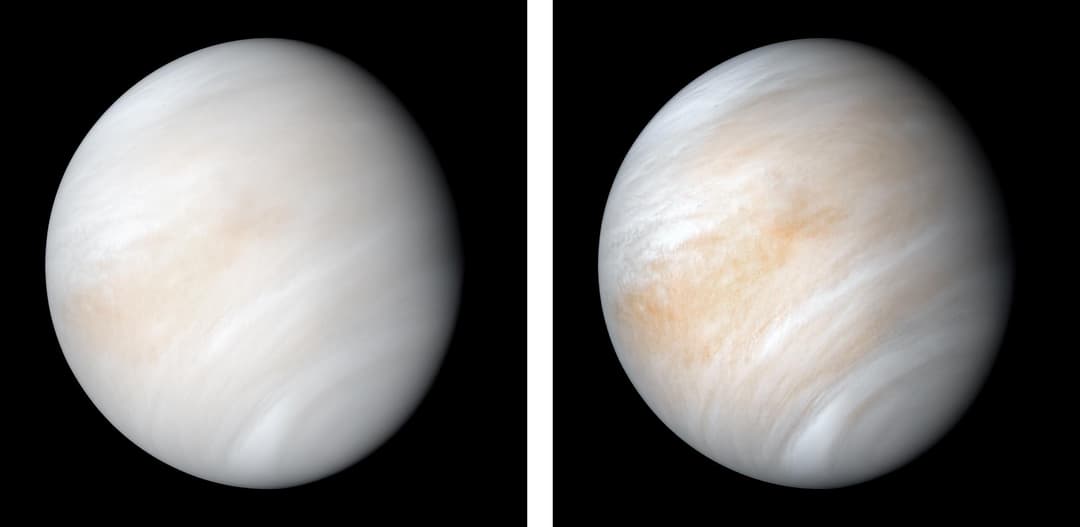
Venus Missions
Venus is having its first real wave of missions in three decades, and each one is built to answer a completely different question about the planet.
NASA's VERITAS: Revealing Truths of Venus
NASA's VERITAS, an orbiter selected as part of NASA's Discovery program, is set to be the first NASA mission to Venus since the 1990s, currently targeting a June 2031 launch after two delays from its original 2027 date. The word veritas means “truth” in Latin, and the mission aims to reveal the truth of how Venus’ and Earth’s paths diverged. It carries a powerful radar system to build 3D global surface maps and a near-infrared spectrometer to study surface composition, plus gravity measurements to probe the planet's interior. Together, the instruments are aimed at one central question: how did Venus and Earth, similar in size, diverge into such different planets.
Morning Star Missions to Venus: Finding Signs of Life
A Rocket Lab and MIT partnership led by astrophysicist Sara Seager, Morning Star missions is a different kind of bet entirely. Morning Star is built as a series of low-cost, fast-turnaround missions rather than one comprehensive survey, starting with a single-instrument probe scanning Venus's clouds for organic molecules. It's also the one lab on this list a reader can actually watch work in real time: its community research runs as an open, mentored strand of the lab's own work, with no academic affiliation required, rather than a closed mission timeline you only hear about after launch.
On Rakiura, that work is currently NMR (nuclear magnetic resonance) spectroscopy analysis, looking for changes over time in spectral data and helping assign peaks, including a subtler hydrogen-deuterium exchange analysis. It's a small, concrete piece of the larger mission, open to anyone willing to learn the tools.
NASA's DAVINCI: A Descent Through Venus's Atmosphere
DAVINCI takes a third approach: an instrumented descent probe, the first Venus mission to fly a science-driven path through the atmosphere down toward the surface, gathering detailed chemical and isotopic data on the way. It's preferring a December 2030 launch, though NASA's mission documentation still shows a provisional window stretching into 2032. Its target is Alpha Regio, one of Venus's oldest surface regions, to look for evidence of the planet's possibly-once-habitable past.
ESA's EnVision: Mapping Venus From Core to Cloud
Developed by the European Space Agency, EnVision is set to launch in November 2031. It targets Venus's ancient habitability phase specifically, examining subsurface structure and atmospheric evolution over a roughly 4-year mission, aiming to build a complete picture of the planet from its inner core to its outer atmosphere.
Want to work on real astrophysics research alongside the scientists doing it?
Apply to Rakiura