

Community research projects
 Earth and the Moon from Orion · NASA
Every lab carries more open questions than it has people to pursue them. A community research project is one of those questions, opened to the Rakiura community: a live strand of a lab’s research, scoped and supervised by the researcher who owns it.
You work with the lab’s data and tools on something the lab needs answered. That work takes many forms, including papers, software, datasets, simulations, and documentation, and all of it is research.
No academic affiliation is required. Entry is by conversation. Tell us what draws you to a project and you will speak with the lab before you begin.
Browse current projects
3 projects
TESS-Keck Survey Data Validation
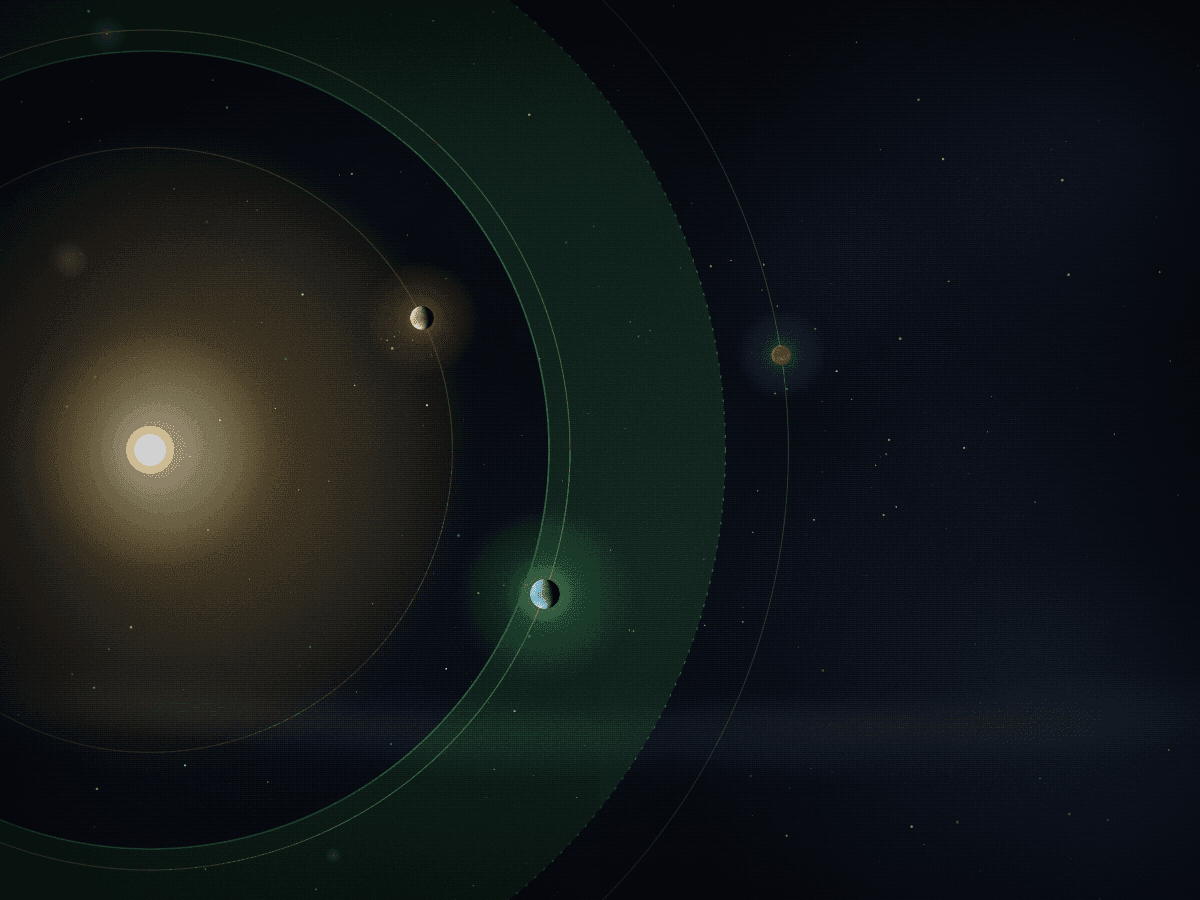
Review TESS-Keck Survey targets and determine if the planets that passed the vetting process turned out to be real planets. First you would have to download the SPOC transit pipeline results from the TESS database and make sure that the transit passes all the tests. Then we check against the list of planet targets that other teams are following up. We don’t want to step on any toes of people that are putting in the work/telescope time to follow up on their targets. Then we would go to the MAST website and check for stellar binaries. Then a high resolution spectral image would need to be taken using Keck Hires or something similar to determine whether there is a hidden binary, and some other details like a V sin(I) and ruwe number. Some of these can be modeled using SpecMatch.
 Michelle Hill
Search for Life in the Clouds of Venus
Help search for signs of life on Venus! The clouds of Venus contain droplets of concentrated sulfuric acid, an environment once thought to be far too harsh for complex chemistry. The Seager Lab has shown that several important classes of molecules, including nucleobases and peptides, can remain stable in concentrated sulfuric acid. In this community project, participants will learn how scientists use nuclear magnetic resonance (NMR) spectroscopy to test molecular stability. Each participant will be given a molecule and NMR data collected over time, and will analyze the data to determine whether the molecule survives in concentrated sulfuric acid. The results will contribute to a broader effort to understand what chemistry is possible in the clouds of Venus and its potential to support life.
 Sara Seager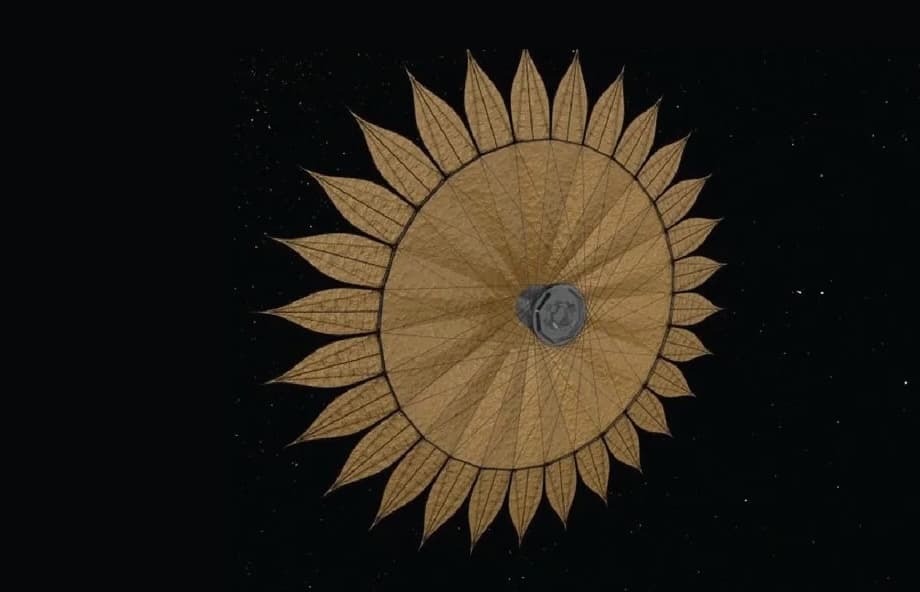
The Starshade Science Case
Help search for signs of life on an Earth twin! A starshade is a large, precisely shaped screen, or coronagraph, that flies in space tens of thousands of kilometers from a telescope, blocking the overwhelming light of a star to directly image faint planets orbiting nearby. In this community project, participants will explore newly conceived planet archetypes: different possible versions of an Earth-sized planet with different atmospheres, surfaces, and potential signs of life. Participants will learn how the Starshade mission could measure the reflected-light spectrum of each planet and investigate which atmospheric gases, surface features, or combinations of signals could reveal a habitable or inhabited world. Participants will also explore how to design the next generation of Starshades and their accompanying space telescopes to find and characterize Earth twins. The results will help us understand what an Earth twin might actually look like from many light-years away and how to design a starshade–telescope system capable of recognizing signs of life.
Sara SeagerFrom first steps to a direction of your own.
Learning and training. Build domain knowledge fast and get the grounding to contribute.
Doing and experimenting. Mentored research tasks, hands on real data.
You own parts of a project. Your first result the field has never seen.
Propose projects and carry them. Stand as PI or Co-I on grants.
Community Researcher
Learning and training. Build domain knowledge fast and get the grounding to contribute.
Research Associate
Doing and experimenting. Mentored research tasks, hands on real data.
Research Contributor
You own parts of a project. Your first result the field has never seen.
Lead Researcher
Propose projects and carry them. Stand as PI or Co-I on grants.
Not sure which project fits yet? Apply anyway. Tell us what draws you, and we will match you with a lab.