Rakiura Lab

Rakiura Lab

Gravitational Wave Paleontology Lab

3d ago

Featured Talk: Gravitational-Wave Paleontology

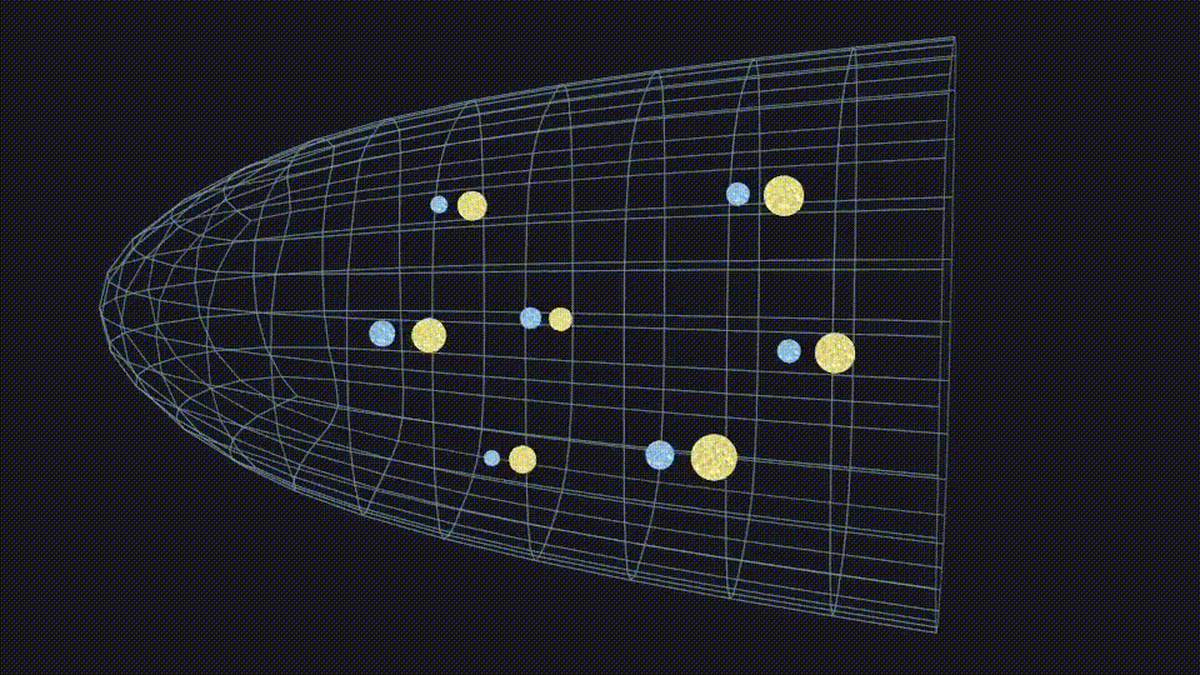
A 15-minute highlight from Floor Broekgaarden's talk on gravitational-wave paleontology — how we read the life histories of massive star systems encoded in LIGO-Virgo merger events.

Rakiura Lab

Rakiura Lab

Morning Star Missions to Venus

14d ago

8 min

The chemistry on Earth's sister planet doesn't add up

Rakiura Lab

Rakiura Lab

Gravitational Wave Paleontology Lab

27d ago

18 min

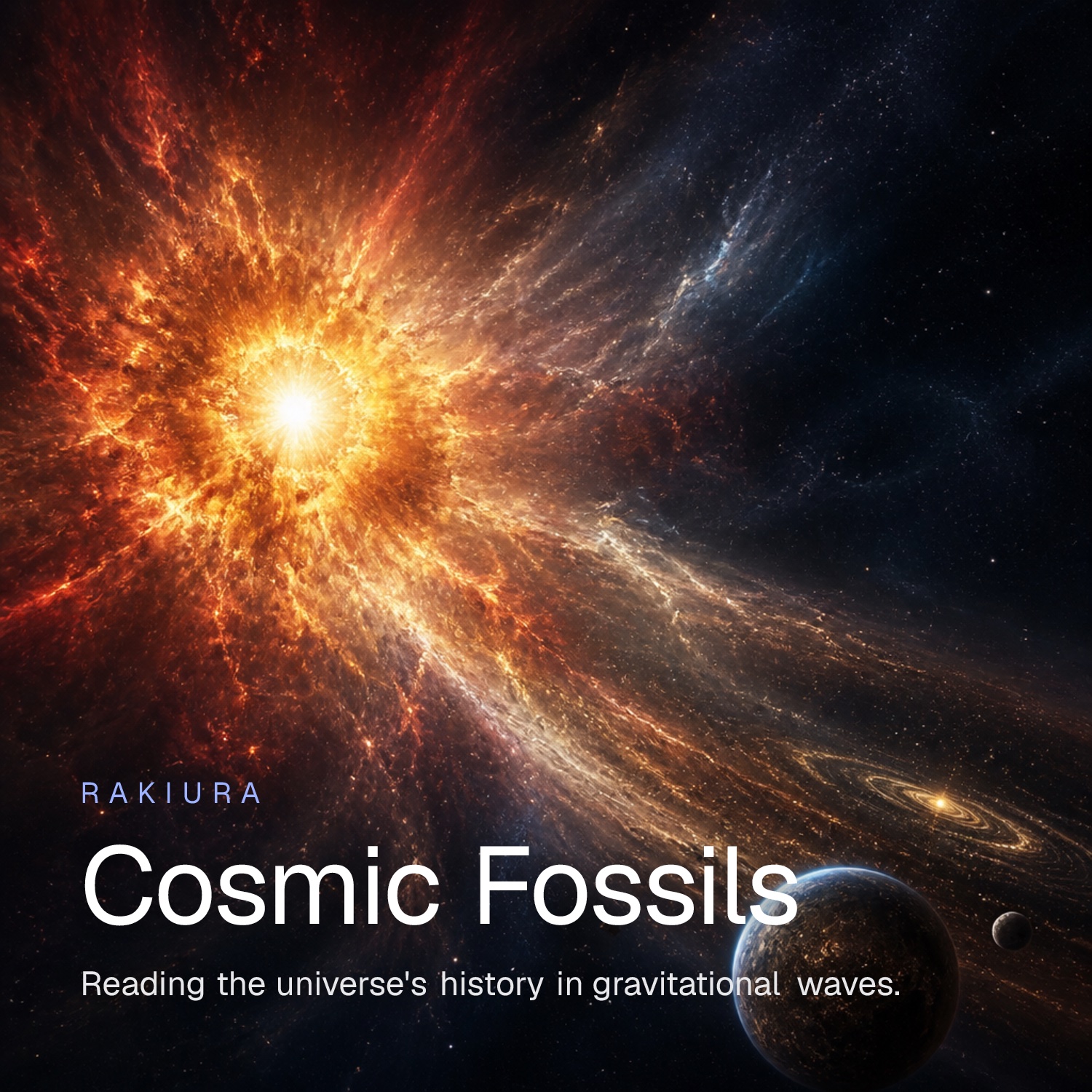
Welcome to Cosmic Fossils

Welcome to Cosmic Fossils. Floor Broekgaarden introduces gravitational-wave paleontology: using black holes as cosmic fossils to reconstruct the lives, deaths, and cosmic role of massive stars — the dinosaurs of our Universe.

Paul Dalba

Paul Dalba

Morning Star Missions to Venus

5mo ago

13 min

S3E1: Molecules That Shouldn't Survive

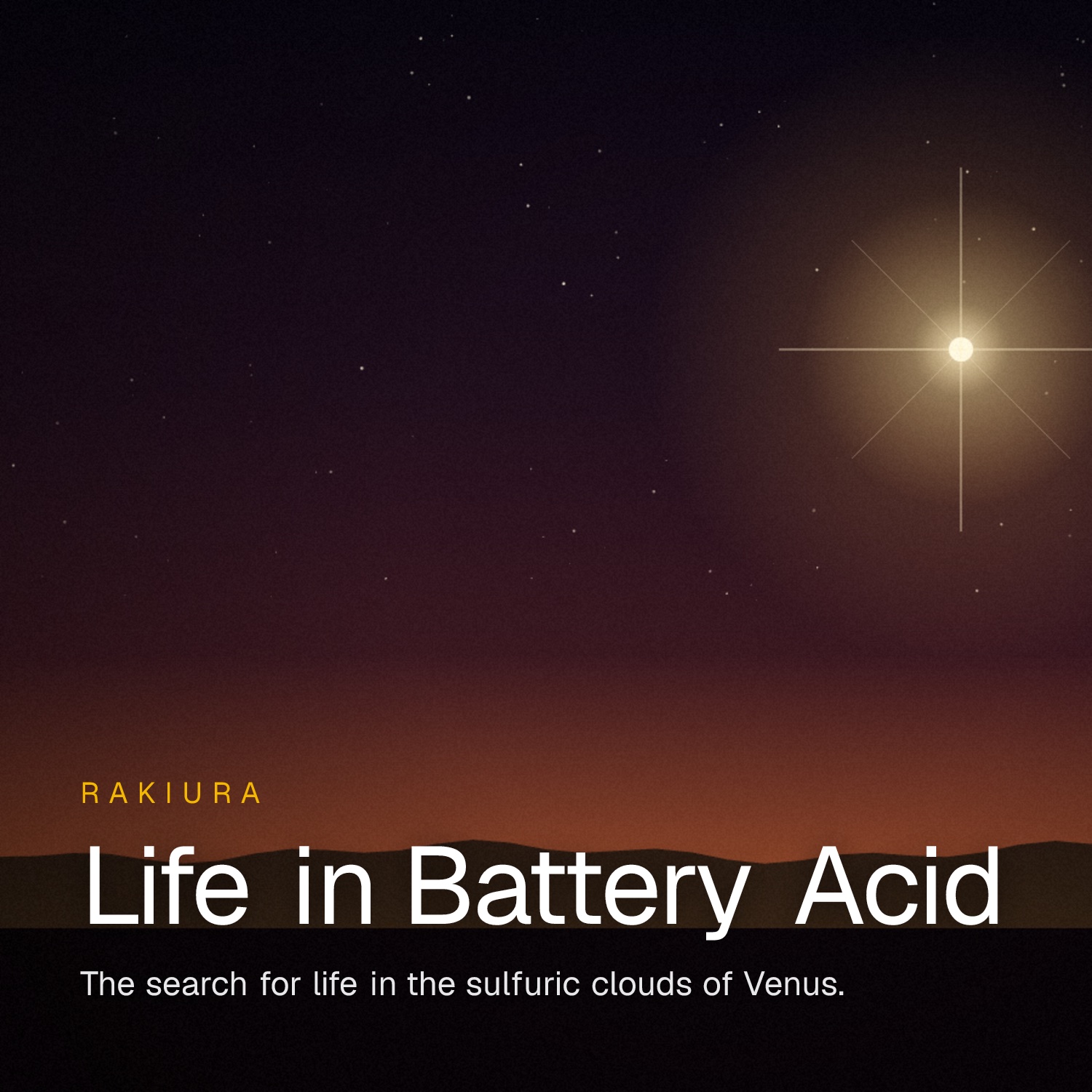
The conventional wisdom in astrobiology was clear: concentrated sulfuric acid destroys most organic molecules so quickly that the chemistry needed for life simply cannot exist in the clouds of Venus. Then a team at MIT put that assumption to a direct test, dissolving the nucleic acid bases of DNA and RNA into the same concentrated acid found in Venusian cloud droplets — and waiting. What happened, or more precisely what didn't happen, forced a rethink of what "habitable" can mean. This episode walks through that experiment, what it found, and why a result that looks like nothing at all turns out to be one of the most consequential findings in Venus astrobiology.

Paul Dalba

Paul Dalba

Morning Star Missions to Venus

6mo ago

11 min

S2E3: The Ammonia Connection and Mode 3

In 1972, a Soviet spacecraft detected ammonia in the clouds of Venus at concentrations so high they couldn't be explained by any known chemistry. The scientific community dismissed it within two years, and the finding sat untouched for half a century. Then a team of researchers built a model showing that ammonia isn't just present in those clouds — it may be actively remaking the chemistry of the entire cloud layer, neutralizing the acid, altering the particle composition, and explaining a set of unrelated atmospheric mysteries all at once. This episode lays out that model, introduces the strange large cloud particles known as Mode 3, and asks a question that becomes harder to dismiss the more you look at it: what could possibly be producing that much ammonia on a planet with no obvious source?

Paul Dalba

Paul Dalba

Morning Star Missions to Venus

6mo ago

15 min

S2E2: Whispers from the Archive

In 1978, a small metal probe plunged through the clouds of Venus and spent just under an hour measuring its atmosphere before going silent forever. The data it sent back was analyzed, filed away, and largely forgotten. Then, in 2021, a team of researchers went back to that archive with a completely different set of questions — and found something extraordinary hidden in the numbers. This episode tells the story of the Pioneer Venus mass spectrometer, the chemical signals its data may have contained all along, and why the phosphine debate of 2020 was what finally sent someone looking. The convergence of two independent datasets, separated by four decades and completely different instruments, is either a remarkable coincidence — or a sign that Venus has been trying to tell us something for a very long time.

Paul Dalba

Paul Dalba

Morning Star Missions to Venus

6mo ago

14 min

S2E1: The Phosphine Bombshell

In September 2020, a team of astronomers announced they had detected a gas in Venus's atmosphere that, according to every known chemistry, had no business being there. The announcement triggered one of the most intense and public scientific debates in recent memory, with rival teams dismantling the data, challenging the statistics, and proposing alternative explanations within months of the original publication. This episode takes you inside the full arc of that controversy: the 2017 telescope observation that started it all, the confirmation attempt, the firestorm of criticism, and the methodical, paper-by-paper response from the team that made the claim. The phosphine question on Venus is not yet resolved. But the fight over it has already changed the course of planetary science.

Paul Dalba

Paul Dalba

Morning Star Missions to Venus

6mo ago

13 min

S1E5: The Acid Challenge

The cloud layer of Venus has Earth-like temperatures and pressures, sunlight, and chemical nutrients — but it has one enormous problem that life as we know it cannot simply ignore. The clouds are made of concentrated sulfuric acid, and not the dilute variety familiar from a chemistry classroom. This episode digs into what that actually means chemically, why the acidity scale most people know breaks down entirely at these concentrations, and why even Earth's most extreme acid-loving organisms offer no real analogy. The science here is genuinely unsettling, and yet researchers have found something equally surprising in the lab: not everything is destroyed. And what survives in those conditions opens up one of the stranger questions in modern astrobiology.

Paul Dalba

Paul Dalba

Morning Star Missions to Venus

7mo ago

15 min

S1E4: Earth's Aerial Biosphere

Before we can seriously ask whether life might exist in the clouds of Venus, we should probably reckon with a discovery that most people have never heard of: life already exists in the clouds of Earth. Scientists collecting cloud water from a mountaintop research station in France found bacteria actively metabolizing, synthesizing protective compounds, and thriving inside droplets barely a fraction of the width of a human hair. This episode explores what Earth's aerial biosphere actually looks like, how recently it was discovered, and why it matters so much for the Venus question. Because if life can evolve to survive in the transient, punishing environment of Earth's clouds, the permanent and continuous cloud layer of Venus starts to look like a very different kind of opportunity.